

It’s a sound that can drive you crazy. That faint, constant hiss coming from the bathroom. Or maybe it’s the “phantom flush” - the toilet refilling itself in the middle of the night for no apparent reason. As we head into fall here in Corona, with windows closing more often to keep the evening cool out, these subtle sounds become much more noticeable. For me and my team, this is the time of year when the calls start picking up about running toilets.
More than just an annoyance, that constant running is the sound of money going down the drain. Here in Corona, where many of us have metered water, even a small, silent leak can quietly add a significant amount to your monthly bill. The good news is that most of the time, the fix is relatively simple. The key is knowing what to look for.
Common Signs and Symptoms
Over my years in the field, I’ve learned that a running toilet leaves a trail of clues. If you’re hearing or seeing any of these, it’s a clear signal that one of the components inside your toilet tank is failing.
- The Constant Hiss or Trickle: This is the most common giveaway. After the tank has filled, you can still hear the sound of water running. This means water is leaking from the tank into the bowl, and the fill valve is constantly trying to replace it.
- The "Phantom Flush": This happens when the toilet tank slowly loses water until the float drops low enough to trigger the fill valve. The toilet will suddenly start refilling as if it were flushed, even though no one has used it. This is a classic sign of a slow leak, usually from a worn-out flapper.
- Visible Water Movement in the Bowl: If you look into the toilet bowl long after it's been flushed, you shouldn't see any ripples or streams of water. If you see a slight disturbance on the surface or a small trickle running down the back of the bowl, you have a confirmed leak from the tank.
- You Have to Jiggle the Handle: If you find yourself frequently wiggling the flush handle to make the toilet stop running, it’s often because the flapper isn't seating correctly. The jiggle might temporarily fix it, but it’s a sure sign the mechanism is failing.
- The Fill Valve Never Shuts Off: One of the most obvious toilet fill valve symptoms is when the water in the tank fills up and keeps going, spilling down the overflow tube. The hissing sound will be loud and constant. This indicates the fill valve itself is broken and not sensing the water level correctly.
- A Weak or Incomplete Flush: Does your toilet seem to lack its usual flushing power? This can happen if the tank isn't filling to the proper level because water is constantly leaking out. The toilet can’t build up the necessary volume of water for a forceful, effective flush.
- A Surprise on Your Water Bill: Sometimes, the first sign isn't in the bathroom at all. A running toilet can waste hundreds of gallons of water a day. If your water bill suddenly spikes without any other explanation, a running toilet is one of the first things you should investigate.
What Causes This Problem
Understanding what’s happening inside the tank makes diagnosing the problem much easier. Your toilet tank has two primary components that manage the water: the fill valve (which lets water in) and the flush valve (which lets water out). When a toilet runs, one of these is almost always the culprit.
Many homes in the Corona area were built during the suburban boom of the 1990s and early 2000s. These large, beautiful tract homes are now hitting an age where their original plumbing components are reaching the end of their lifespan. The plastic and rubber parts inside a toilet tank simply weren't designed to last forever.
Here are the most common causes I see:
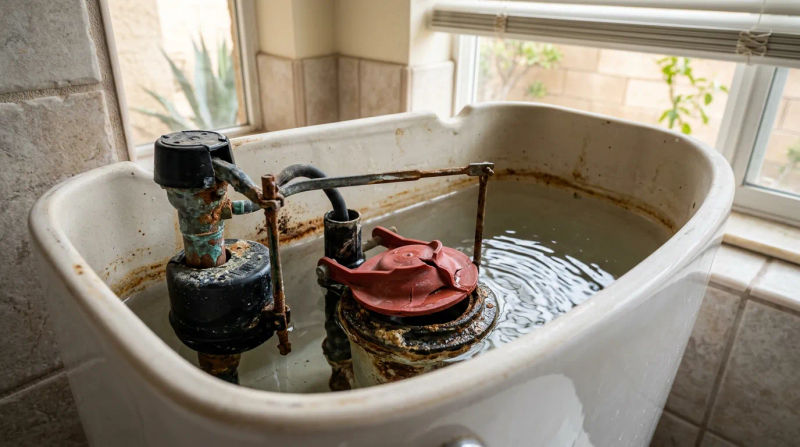
- A Degraded Toilet Flapper: This is, without a doubt, the number one cause of a running toilet. The flapper is the rubber seal at the bottom of the tank that lifts when you flush. Over time, minerals in the water and cleaning chemicals cause the rubber to warp, harden, or blister. These are clear toilet flapper warning signs. When the flapper no longer creates a perfect seal, water seeps out, causing the toilet to run. In homes from the 90s, these original flappers are long past their prime.
- A Faulty Fill Valve: The fill valve is the tall assembly that refills the tank after a flush. Common toilet fill valve symptoms include not shutting off, making odd noises, or failing to fill the tank at all. Debris can get caught in the valve, or the internal seals can simply wear out. This is a very common issue that requires a full replacement of the valve assembly.
- An Incorrectly Sized or Set Flapper Chain: The chain connecting the flush handle to the flapper needs to have just the right amount of slack. If it’s too short, it will hold the flapper slightly open, causing a constant leak. If it’s too long, it can get caught underneath the flapper, preventing it from sealing properly.
- The Water Level is Too High: The water level in the tank is controlled by a float attached to the fill valve. If this float is set too high, the water level will rise above the overflow tube and constantly drain out. It’s a simple adjustment, but it’s a common source of wasted water.
- A Worn Flush Valve Gasket: The large gasket that seals the flush valve assembly to the bottom of the tank can also degrade over time. This is a less common but more involved repair, as it requires removing the entire tank from the bowl to replace.
When to Call a Professional
Many homeowners are comfortable with basic DIY tasks, and some running toilet issues are perfect for a weekend fix. Replacing a flapper, for instance, is usually a quick and inexpensive job that most people can handle.
However, there are times when calling for help is the smarter, faster, and ultimately cheaper option. A proper running toilet repair requires getting the diagnosis right the first time.
Consider calling an experienced professional if:
- You’ve replaced the flapper, but the toilet still runs. This often means the problem isn't the flapper itself, but the flush valve seat it rests on. This surface can become pitted or corroded, preventing a good seal. Fixing this is a more advanced repair.
- The problem is clearly the fill valve. While replacing a fill valve is manageable, it involves shutting off the water and working with supply lines that can be old and brittle. If you're not comfortable with that, it's best to have a professional handle it.
- You can’t pinpoint the source of the leak. If you're not sure what's wrong, you can waste time and money buying parts you don't need. An expert can diagnose the issue quickly and accurately.
- You see any water on the floor. A running toilet is an internal problem. Water on the floor indicates a different issue, like a failing wax ring or a cracked tank, which requires immediate attention.
For any running toilet in Corona, CA, getting it fixed promptly is key to avoiding a shocking water bill. A qualified handyman can resolve the issue efficiently, ensuring the correct parts are used and everything is adjusted perfectly.
Conclusion
A running toilet is one of those household problems that’s easy to ignore, but the cost of inaction adds up quickly. By listening for the hiss and watching for the phantom flush, you can catch the problem early. Most often, the cause is a simple, worn-out part like a flapper or fill valve - components that are at the end of their life in many homes built in the 90s and 2000s.
Don't let a small leak turn into a big expense. Addressing it now not only restores peace and quiet to your home but also protects your wallet from unnecessary water waste. Whether it's a simple part replacement you can do yourself or a job that requires a bit more expertise, taking action is the most important step.
If you notice any of these signs and aren't comfortable tackling the repair yourself, contact a local handyman service for an inspection.